Homeless in San Francisco: Day Nineteen

19 Sep

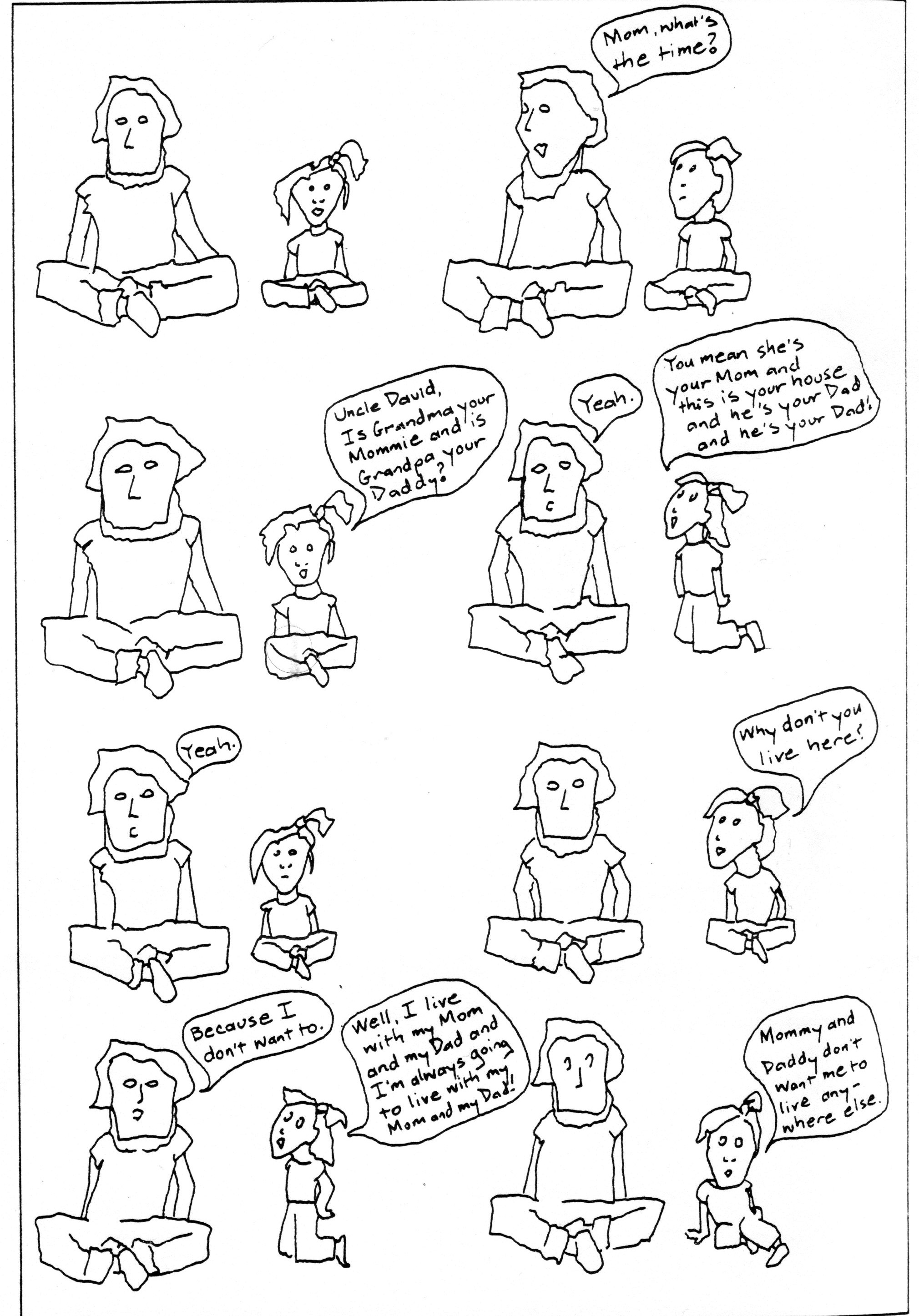
There is not a free grain of sand in America.  I will return to the point.  In 2004, I presented a paper at the Mid-Atlantic Popular Culture/American Culture Association Annual Conference in Buffalo, New York.  I enjoy the people at these conferences for their open enthusiasm.  I respect the organizations because they are open to all, a far cry from elitist groups like College Art Association or Modern Library Association.  Weekends in downtown Buffalo, where our events were taking place, is extremely quiet.  Buffalo is one of those American cities whose industrial prestige vanished long ago.  During our visit, downtown was host to artists’ lofts and professors from nearby State University of New York.  While returning home, I rode a municipal bus to the airport through a residential district that was predominantly African American.  I did not see much outdoor activity; it was November and somewhat cold.  But I took in the city as it was.  The bus route is long.  Along the way, we passed many boarded up storefronts.  The only sign of life I saw that afternoon was a McDonald’s restaurant.  Immaculately clean and operational, this was the only business I noticed that had its own perimeter, a square area of parking lot completely surrounding the building.

A perfect metaphor, this vision of America takes into account a post-industrial malaise that includes the disappearance of manufacturing prowess, except in matters of war, the evacuation of jobs from the country, the rise of a service sector that keeps the luckier ones employed without the security or benefits the country could once boast about.  People cope with this state of affairs in many ways, significantly, a portion of the population by moving from joblessness to state dependency.  San Francisco has a huge social safety net.  There are city and state offices and services that take many forms.  There are non-profit organizations and religious organizations feeding, housing, and assisting with job orientation, training and seeking.  True, the non-profit sector is hurting badly during the current economic collapse.

I recently read an online article about disability claims spiking each year during the current economic crisis.  And apparently, disability claims have historically climbed whenever the jobless rate has risen.  I know that if I were to apply for disability status as an AIDS-afflicted person a case could eventually be made and won, even through one or more denials and counter petitions and one to several years of patient determination.  I continue to choose not to apply because I want to work.  A disabled person receiving benefits can work, but their access to working hours is limited by law.  I have had many friends over time who chose to apply and receive disability benefits living with HIV/AIDS.  In the early years of the pandemic, individuals were overwhelmed by the nightmare of the disease.  One way to keep their sanity was to move away from stress-producing work environments.  Disability status helped people successfully navigate away from these situations.  Stress kills people with life-threatening illnesses.

Marijuana can be a friend to those suffering from AIDS and certain side effects that attend.  Medical marijuana dispensaries are appearing everywhere in the city now.  They are becoming ubiquitous, as Starbucks once was with a store appearing seemingly on every block within major cities like New York.  In 2009, I listened to two young Introduction to Horticulture classmates discussing strategies for obtaining a medical prescription for marijuana.  We were in the greenhouse at City College of San Francisco.  The one student talked about an injury to his lower back and how he managed to eventually obtain a permit to use medical marijuana for the problem.  He spoke about the matter to his classmate without signs of mobility impairment as we all squatted and reached beneath tables to remove weeds.  They made it sound so simple.  It was as simple a matter for me to obtain marijuana when I began smoking at age 15.  Law enforcement did not catch up with me until 33 years later.  I have somewhat lost my appetite for the stuff, but still believe it should be legal whether or not it is used for medicinal purposes.

There are a class of people entirely outside of the jobless social safety net.  They occupy space wherever they can find it.  I see them receiving tickets for violating the new sit/lie law in the city that forbids them to tarry on sidewalks.  A law like this, though, does not change the number of homeless in the city.  They sleep in alleyways and in front of empty storefronts, in Golden Gate Park, anywhere possible.

I once tried to find an open space to sleep with my friends Patrick and Tina.  Tina was moving to Hong Kong.  It was the last day Patrick and I would see her in New York.  We decided to drive to Long Island and find a quiet seaside location to pitch a tent.  We were equipped with food for a meal and wine to toast to our friend’s success in her new role as a curator overseas.  Our first stop was at Robert J. Moses State Park.  We arrived sometime after 11:00 PM.  How elated we were to have lapping waves welcome us.  Our pleasure was destroyed minutes later as a State trooper drove up in his Jeep, headlights blinding us.  He barked the command to pack and leave, but not before we insisted on a recommendation for completing our plans.  We drove to Heckscher State Park that had campgrounds bay side.  By this time it was past midnight.  Because our energy was flagging we ignored the ranger’s station and drove to a deserted camp site.  Again our happiness was premature as we were chased out for having assumed squatter’s rights.

Defeated, it was time to head back to Manhattan.  We looked for a motel on our return.  Our next stop was again disappointing, but not without some comic relief.  Having parked the car in view of the office, Patrick and Tina walked ahead of me toward the front desk where a middle-aged woman stared at us with God’s conviction behind her eyeglasses.  Their encounter was brief; before any questions were asked, all she would say was “we don’t have those kind of rooms here.”  A few more miles down the road we reached a motel where the proprietor took us in without question.  We entered our room tracking in sand and weary relief.

Max Yawney, untitled photograph (McDonald’s near Astor Place, New York), circa 2007.
Homeless in San Francisco: Day Sixteen

16 Sep

My father re-entered my life when I was twenty-one.  It was not my choice.   My mother asked one day, I wonder what your father is doing?  She looked through the telephone directory and called the first entry with a name that matched his.  Eventually I made a few visits to his home in Torrance, where he lived with his second wife, Colleen.  I really liked Colleen for her earthiness and easy going manner.  She had cleaned my father up since the time she first met him.  He was a bookie then, walking the streets of Los Angeles in flip flops.  She was a beautician who ran her own shop.  He got legitimate work at the San Pedro shipyards as a welder and became active in union politics.  He was still shady.

The overwhelming feature of their home was the accumulation of junk.  It covered every surface, including a sofa in the living room protected in a clear plastic cover.  The only surfaces free from clutter were areas of the floors and the dining table when meals were served.  It was impossible to lean an elbow on a counter in the fully equipped kitchen.  Product boxes with their contents appeared everywhere.  It was dizzying.  But it wasn’t until Dad gave me a tour of the area behind the house that I had to shake my head.  He wanted me to see his truck parked in a garage, which he used for a welding business he was developing independently of the shipyards.  We stepped onto a concrete patio beside a pool.  Lining the patio in neat rows were more home products in boxes.

Hoarding is one of the newest spectacles in American life.  What a progression from the Rich and Famous to the Sick and Hoarding on television.  It is truly frightening when it becomes enmeshed with the deeper recesses of people’s psyches.  I was once told the story of an old man dying in his apartment when a huge pile of whatever he hoarded came crashing down on him.  And this morning my coffee mate Marjorie told me of a woman who had trouble opening the front door to her apartment, wrestling with the door every time she tried to enter.  One of my professors at Hunter College, City University of New York, kept an apartment with his partner in the Columbia University neighborhood.  He became my thesis advisor.  On a visit to his home, I was led through the front hallway, lined on both sides with bookshelves, to what must of been his study, with at least four more bookshelves taking up central space in the room.  He had a corner where he could sit in a chair.  Even the kitchen was supplied with bookshelves, although the books continued the theme of art history rather than cooking.  And then there was the day he was moving books into his office space on campus because he had run out of room at home.  The effort looked Herculean.

Books became a love and a curse in my life (blame Mom).  I have accumulated so many books that they have a life of their own in storage.  When I taught a course through Free University of San Francisco earlier this year, Minorities and the Critical Decade: World War II and After, I plunged through boxes in a storage unit to free material for the course.  But what does one do with books when homeless, especially so many?  When I moved from New York I donated many books to Housing Works.  While in San Francisco, I began divesting in September 2009 when my income took a decided drop.  I started selling online and found that books, even pamphlets, I held onto for years could fetch a price.  And those of no value I donated to Community Thrift Store in the Mission for my favorite charity, The Sisters of Perpetual Indulgence.

What I notice now is that thousands, perhaps millions, of people have taken to selling books online.  Five out of every ten online records read “former library.”  If your local public library is not throwing out books, as the San Francisco Public Library quietly tried to do several years ago before being exposed and vilified by a book loving citizenry, there are probably online booksellers pilfering the collections.  I once did my good citizen’s duty by contacting a Washington State university library about a book I had purchased online.  The seller did not advertise its rightful credentials, but I returned the book to its proper owner anyway.  Online booksellers scour shelves at thrift stores with a hand-held device that reads bar codes.  The seller can peruse instant results on what the book is selling for online at, say, amazon.  This past Wednesday I browsed through the tables in front of the public library’s main branch, where used books are sold every week for $1 apiece.  A gentleman beside me, probably too poor to afford the scanning device, was loading books into cardboard boxes without much attention to what he was picking up.  Certainly not the book lover type.  Beware, though, of what you buy.  Read a common online sales description, such as, May have marks or highlighting, and ask yourself, Is the title correct?

I should have known I was in trouble as I left New York.  My rental truck was stopped at a weigh station because it was too many pounds over the legal limit for transport.  When the officers asked what I was carrying, and my reply was books, they let me pass.  I decided to find cheaper storage space as impending homelessness loomed.  I have had a unit with Public Storage since arriving in San Francisco because books just do not fit in walk-in closets that are used as places to sleep.  The facility raised my monthly rate three times in two years.  I found a cheaper storage facility, but only managed to move half of the contents from the former because I did not have enough cash for another truck rental.  My storage fees have increased instead of decreased!  This is comedy at its best.

This is my advice to you: if you love something, love it from a distance.  It is said love knows no possession.  That must be true because once possessed love is replaced by something entirely different, like love with numerous headaches.

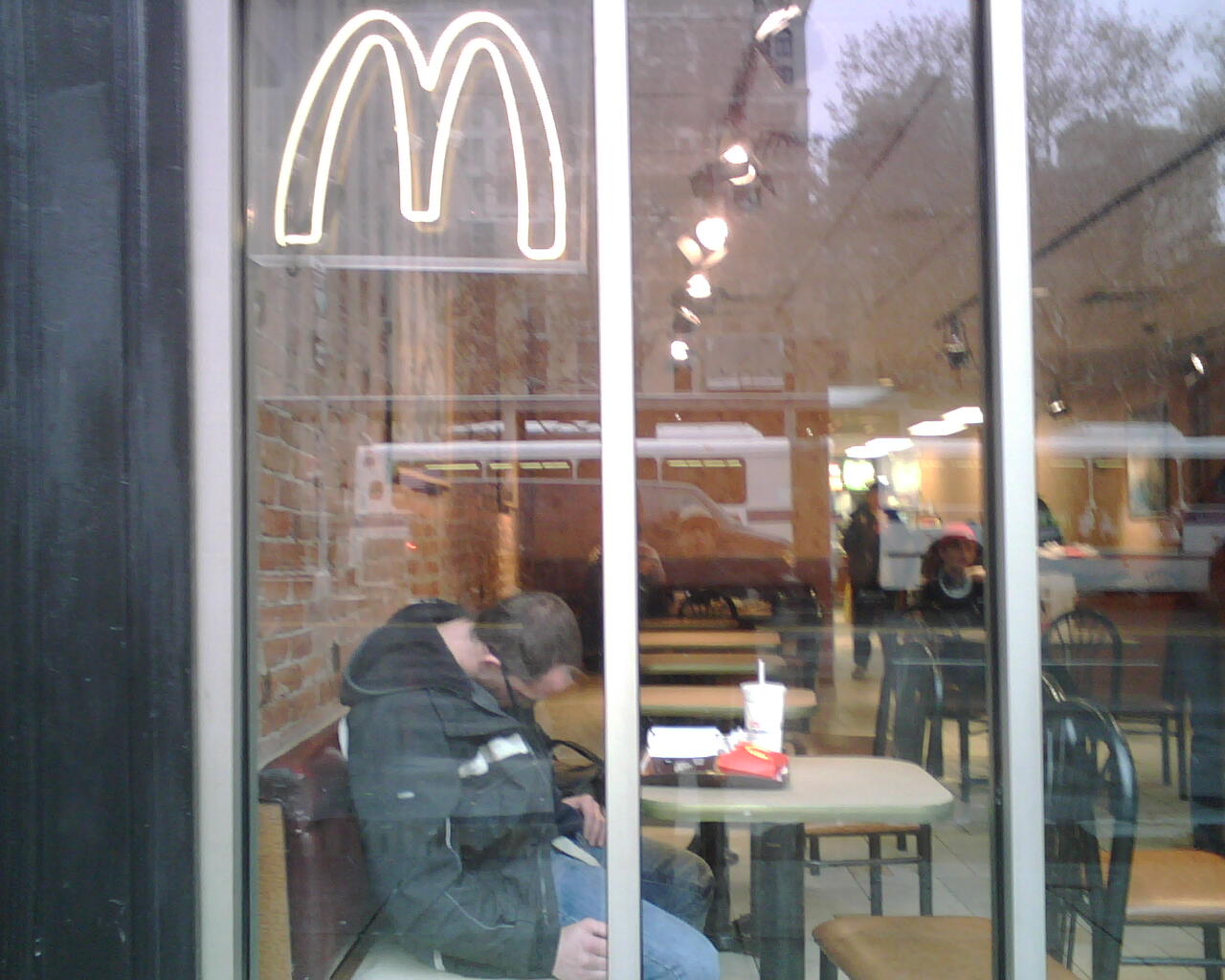
MY NIECE CHRISTINA ASKS A QUESTION


Homeless in San Francisco: Day Fourteen

14 Sep

The image submitted here two days ago was actually drawn in 2009.  I have always been interested in homelessness but from a particular distance.  I can remember drawn near life-size portraits of homeless individuals by a Los Angeles artist that were riveting.  This was around 1980 and my first encounter with the subject in art.  I first came to the subject myself in 1983 while living in New York City.  I drew memory portraits in oil pastel on Bristol paper of individuals I noticed in subway cars.  My memory depended upon a few minutes of available observation.  Of these portraits, at least two people were homeless, both women.  I also drew a ball-point pen portrait from memory of a woman stuffing newspaper into her coat sleeves on a subway platform during a winter in the city.  The pen-and-ink drawing of an old man sitting in an SRO (Single Room Occupancy) posted two days ago was inspired by two different and unlikely sources.  The man is bearded and resembles the figure of my grandfather on my mother’s side, Ray “Duke” Moore, a man who was reknown as a martial artist and martial arts instructor in San Francisco.  He ran his own school for thirty years or so before retiring to San Jose with my grandmother Vera.  He survived her death and eventually lived in a trailer with a common-law wife in the Sacramento/Folsom region.  The figure in the drawing closely resembles his figure in a photograph during his last years in California.  In the photograph he is seated in a rocking chair looking directly at the camera, a flowing white beard and sunglasses accentuating his appearance.  The second instance of inspiration for the drawing came from a local New York newspaper article, perhaps the Guardian, about the deceased writer Quentin Crisp’s then life in the Hotel Chelsea during his final years.  The article was extremely unflattering, painting a portrait of Crisp as a man who lived in complete dishevelment.  I had seen Crisp sitting primly at an art reception at Leslie-Lohman, when the gallery was still located basement level on the edge of SoHo near Broadway.  He never seemed to move from his seat, nor flinch a muscle, as if he were either embalmed or an effigy in wax for display.  He looked nearly regal, yet fragile and vulnerable, as if his composure was his only protection from what life would have said to him.

Both my grandfather and Crisp were men waiting, in a sense, for the finality of their life.  I cannot imagine that home had any particular value in their circumstances.  My grandfather stares out from the photograph as if his surroundings were superfluous.  Crisp’s littered apartment space was probably not of concern.  The mind must be the most central component of home.  I am reminded of director Hirokazu Koreeda’s film After Life (1998).  In this story, the dead arrive at a rest stop where they are assisted in manufacturing a final memory of life.  It is a modest hotel with a big production budget for the final chosen memorial scene, created in a large studio.  My grandfather was homeless in the end as was Crisp.

The Hotel Kinney has been quite comfortable.  But this morning I was surprised by a disposal unit attached to the hallway wall outside of the common shower room.  Marked Biohazard, this box is used for disposing of needles and syringes.  I have yet to meet a neighbor in the building, although I have said hello to two strangers here.  Before obtaining the room, I spent different nights at a facility at 1001 Polk Street, at the corner of Geary.  I was referred to that facility by Glide [Memorial United Methodist Church] at Ellis and  Taylor Streets.  I knew of Glide’s radical orientation towards community when I was active with The Riverside Church in New York.  Once in San Francisco, I was invited to a Sunday service by an acquaintance from New York’s Gotham Volleyball League, a gay, lesbian and straight-friendly sports organization.  Monday through Friday at Glide, one can stand in line to request housing.  In a first-floor office, a placement administrator searches for available units throughout the city using a computerized database.  The first question asked is for the last four digits of your Social Security number, or “soch.”   The Polk Street facility is actually run by Episcopal Community Services.  I was only issued single-night referrals, but knew that 90-day housing was somehow available to others.  I suspect that the same was not available to me because a tuberculosis test result was not yet in their computerized system.  There is a deadline for reporting TB status to Glide.  Once past the deadline, assistance is not available for housing placement.

The facility on Polk is huge.  I can remember walking by or passing by on the 19 bus and looking at the residents standing outside.  There are always people hanging out, probably most on cigarette breaks.  I tried to avoid walking through the small crowds that would gather there.  I was nervous entering my first night.  But the feeling dissipated once I made myself comfortable on one of the metal frame beds.  There are single beds and bunks, all with numbers.  The bed is furnished with a plastic-enclosed mattress.  A white sheet and woolen blanket are issued at the reception desk within the lobby of the facility.  White terry cloth towels are issued by request.  The bed is located in a ward that contains roughly 25 or more units.  Each floor has several wards partitioned by walls which do not reach the ceiling.  A common toilet area, which includes a metal bin filled with hotel-style wrapped bars of soap, and a common shower area are located on each floor.  The beds are arranged in rows with walking space between.  One is entirely in the open and able to observe neighbors.  Lights out occurs at 9:30 PM and lights on at 5:30 AM.  Dinner and breakfast are served in a basement level eating area.  The line forms quickly at the service counter after breakfast call at 6:00 AM.

I expect that my stay at Hotel Kinney will be followed by more nights at shelters like the Polk Street facility.  I do not look forward to that.  But I also do not grant too great a degree of comfort to where I am housed because of impending displacement.  It is as if I am the portrait of my grandfather or Crisp.  I am, though, not imagining a home in the mind.  It eludes me entirely.

Two Women, 1983. Oil pastel on Bristol paper, 14 x 18 in. Collection of Naomi Sager.

Homeless in San Francisco: Day Twelve

12 Sep

Writing a daily blog about being homeless is about as easy as catching moving fish in water by hand.  Since becoming homeless on September 1st, I find there are no road rules for moving forward.  Between seeking shelter at facilities with one-night stays or at a friend’s apartment, the unexpected contours of time are ever present.

Luckily, since Friday, I am enjoying a 28-day stay at Hotel Kinney on Eddy at Leavenworth.  The building is old but the facility as temporary housing is new.  The room is equipped with a bed, dresser, metal coat rack, small refrigerator and microwave, and a sink with mirrored cabinet overhead.  Bathrooms and a shower are common spaces.  There is also a first-floor kitchen/dining area across from the check-in desk.  One must be buzzed in at the iron gate facing the street.  Then signing in on a sheet attached to a clipboard is required: date, name, unit number, time in, “Intention.”   I haven’t filled out my intentions yet; the clerk told me not to worry about it.  Intention is lost anyway to the confusion that confronts me day to day.

Pippa, the social worker at St. Mary’s Medical Center HIV Clinic helped me apply for the room through Department of Health.  Within a week I was placed.  The call came on Friday afternoon while I was working for cash at a small business bookstore.  I met the on-site program facilitator at his office around 4:30, signed forms, and was handed a key.  I had a valise with a small amount of clothing and a backpack with resume, notebook, and other assorted office needs.  I had been notified the day before about working at Expressions Gallery in Berkeley on Saturday; the person who was hired over me to assist with installing their newest show dropped out.  I needed a wake up knock.  The desk clerk, a young, handsome Indian American, advised me to ask the person relieving him at 10:00 PM.  By 9, I was out for the night.  But a knock came at my door.  Waking up I thought the clerk must have passed on my request to his co-worker.  I showered, shit, and dressed for the work day.  Once downstairs I greeted the overnight clerk, also a young, good-looking Indian American, to thank him for waking me  up.  To my astonishment and amusement I was informed that the knock was for “room check.”  In fact, it was 2 in the morning by the clock in his work station.  I returned to bed and the clerk woke me at 6 with another knock on the door.

Today I am moving the last of my possessions from my former residence to storage.  I borrow the bookstore owner’s car once again and arrange pick up by an agreed time with the former landlord.  The landlord sublet his walk-in closet to me from the time I moved in on January 9, 2009 until the time he told me to go.  Having been underemployed and, at times, unemployed since arriving in San Francisco from New York on February 2, 2008, it was inevitable that I would lose housing.  The landlord is a friend of a friend in New York.  Our mutual friend was a member of my Reiki circle under Dr. Marsha Woolf, a holistic, Tibetan and Chinese medicinal doctor.  Susan, my Reiki mate, spoke to Joe, the landlord, about my arrival in the city.  Joe and I met over his home-cooked Thanksgiving dinner in 2008.  Incredibly, Joe shares with my first San Francisco roommate, Donald, similar work practice and one significant characteristic: massage and clinical depression.

Untitled from Lives of the Obscure, 2009. Pen-and-ink on Bristol paper, 12 x 9 in. Collection of Gilbert Chan.