Tag Archives: san francisco

100th Year Commemoration of the Bread and Roses Strike

4 Jan

January 12, 2012 marks the 100th anniversary of the Bread and Roses garment mill workers strike in Lawrence, MA.  And just as today’s Occupy Wall Street movement focuses on the 99% and 1%, the truth of 1912 was that 1% of the richest Americans owned 50% of the country’s wealth.  Conducting a difficult eight-week struggle during the dead of winter against “Textile Trust” mill owners, banks, state militia, police, clergy and local government, this strike involved thousands of immigrants, nearly half women, fighting for justice and human rights, a watershed moment in the history of American labor struggles.  LaborFest commemorates this event with a cultural and arts event at ILWU Local 34 at 801 2nd Street, San Francisco, next to AT&T stadium.

Painting, photography, drawing and graphic art will be on display from Sunday, January 8th through Wednesday, January 11th, 2012.  A reception will be held for the nine artists participating in this exhibition on Sunday from noon to 3 PM.  Free parking is available in the ILWU parking lot adjacent to the corner of 2nd and King Streets.  Viewing hours will be from noon to 5 PM, Sunday through Tuesday, and noon to evening closing, Wednesday.

A potluck will be held on Wednesday, beginning at 6:30 PM with a presentation on the Bread and Roses Strike at 7:15 PM.  Bring a dish and your voice.  All are welcome.  A $10.00 donation will go to Occupy San Francisco and ILWU Local 21 EGT Fighting Fund, Longview, WA.  No one will be turned away due to lack of funds.  Artists and poets include David Rovics, Renee Gibbons, Alice Rogoff, The Rocking Solidarity Chorus, Halie Hammer, Mary Rudge and others.  LaborFest organizes events on labor and culture for the month of July every year, 2012 marking the nineteenth year of July events sponsored by the organization.  Events for January 2012 will be posted at laborfest.net.

Jesus Barraza and Melanie Cervantes are graphic arts collaborators in their project Dignidad Rebelde.  The poster products from this teamwork reflect community struggles, visions of hope and assertions of dignity.  Their subject matter embraces a wide humanity, recognizing that “the history of the majority of people worldwide is a history of colonialism, genocide, and exploitation.”  Barraza, an activist printmaker based in San Leandro, CA, is co-founder of ten12, a collective of digital artists, and Taller Tupac Amaru, a studio devoted to screen printing.  Barraza has taught and exhibited widely, including Chicago, El Paso, New York, San Francisco, Santa Fe, Tokyo, Bolivia and Mexico.  Cervantes, who holds a BA in Ethnic Studies from the University of California, Berkeley, is an Xicana activist-artist who serves justice movements with her artistic vision.  She has exhibited in Austin, Chicago, Los Angeles, and San Francisco, and her art has reached audiences worldwide.

The muralist Mike Conner is a former member of IBEW as an electrician and is now a member of IATSE Local 1 at the Metropolitan Opera in New York City.  His art has been focused on labor themes for decades, where it has been displayed at labor festivals and art exhibitions, including a continuing series called Boss Greed.  He is a continuing contributor to LaborFest, participating in the commemoration of the 1934 San Francisco general strike in 2009 and the 100th Year Commemoration of the Triangle Shirtwaist Factory Fire this year.

Jan Cook has always made art in the context of social issues.  Her early work developed first during the rising awareness of women’s issues in the 1970s and gradually broadened to include labor, race and class perspectives.  Cook studied at the University of Illinois and California State University, Los Angeles, obtaining irrelevant BFA and MFA degrees.  After a few years of experimentation as an illustrator in the movie industry, Cook became involved with the Los Angeles Mural Movement, working with Judy Baca and others.  Moving to San Francisco, the artist continued painting murals and making prints.  Recently Cook has been combining printmaking with digital painting, altering hand-drawn images with found pictures of historical and contemporary news events from the Internet.

David Duckworth employs drawing to comment on the social conditions of cities and political states.  He has exhibited at Bluedahlias and Underglass in San Francisco, Works/San José, and with Collaborative Concepts at Saunders Farm, Garrison, NY.  As a performance artist, Duckworth has organized and presented Detainee at Roger Smith Hotel, New York, and collaborative work at Jonathan Schorr Gallery, New York.  As a curator, he has organized Body Commodities / Queer Packaging and American Seven at Works/San José, Detainee Wear at Bluedahlias, and several exhibitions for LaborFest.

Gloria Frym’s family connects the artist to the textile industry for over three generations.  Her immigrant father, grandparents and other relatives all worked in the Manhattan textile industry.  Her maternal grandparents are buried in Workman’s Circle in a Long Island cemetery.  An associate professor in the MFA and BA Writing and Literature Programs at California College of the Arts, Frym has been photographing handmade protest signage for the last ten years.  Primarily a writer, Frym is the author of two short story collections, Distance No Object (City Lights Books) and How I Learned (Coffee House Press), as well as several volumes of poetry, including Mind Over Matter (BlazeVOX), Any Time Soon (Little Red Leaves), and The Lost Sappho Poems (Effing Press).  She also has a book of interviews with women artists and published numerous essays, articles and reviews.

A San Francisco-based painter, Amelia Lewis has exhibited in Dallas, Los Angeles and San Francisco since 2001 and curated exhibitions since 2004.  All images are from the Do I Look Illegal series, which first opened at the former Timezone Gallery, San Francisco.

Graphic artist Doug Minkler has designed posters for several decades that address social inequalities and oppression, war, and corporate profiteering and plutocracy.  The artist was recently honored by the Center for the Study of Political Graphics in Los Angeles.  Minkler is a past contributor to LaborFest, most recently exhibited at SOMArts Cultural Center and Expressions Gallery, Berkeley.

In artist Rachel Schreiber’s specific work for this exhibition, the portraits of early twentieth-century textile workers’ immigrant women leaders and contemporary labor activists of Mexico bridge the time span between then and now, American labor activism of the past and global labor activism of the present.    Presently Associate Professor and Director of Humanities at The California College of the Arts, Oakland and SF, Schreiber has exhibited at the Contemporary Jewish Museum, San Francisco, Maryland Institute College of Art, Baltimore, SOMArts Cultural Center, San Francisco, and Art in General, New York.  The artist is also active as a instructor, lecturer and cultural historian.
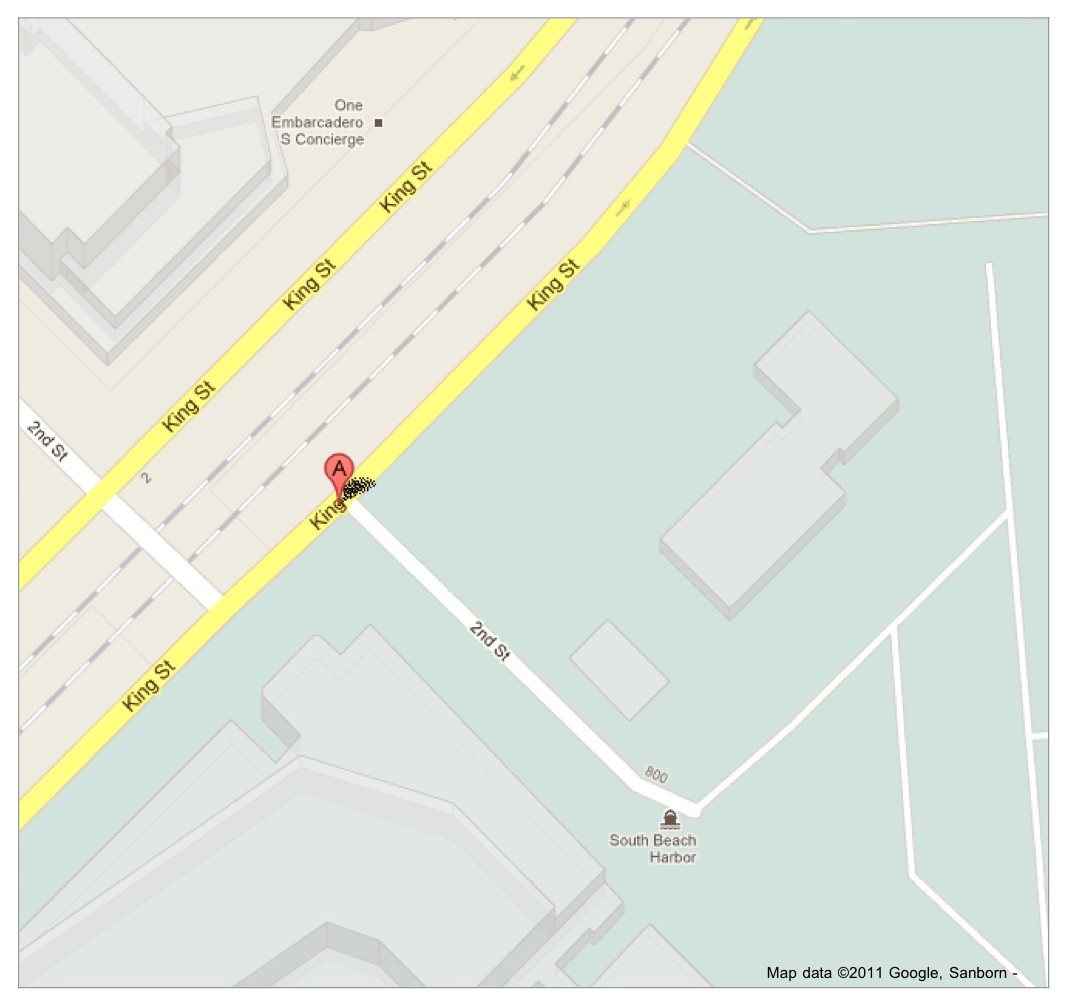
Source: David Duckworth Research, Google Maps.

A New Year

3 Jan

The new year has begun.  This was the first New Year celebration that I attended in which Auld Lang Syne was not sung by those gathered together.  Instead, we sang the Internationale, a staple at Steve and Kazmi’s home celebration of the New Year.

“Arise, you prisoners of starvation! / Arise, you wretched of the earth! / For justice thunders condemnation. / A better world’s in birth. / No more tradition’s chains shall bind us. / Arise, you slaves, no more in thrall! / The earth shall rise on new foundations. / We have been naught, we shall be all. / ‘Tis the final conflict: / Let each stand in his place. / The international working class / Shall be the human race.”

“Arriba, parias de la tierra! / En pié, famélica legión! / Los proletarios gritan: Guerra! / Guerra hasta el fin de la opresión. / Borrad el rastro del pasado! / Arriba, esclavos, todos en pié! / El mundo va a cambiar de base. / Los nada de hoy todo han de ser. / Agrupémonos todos, / En la lucha final. / El género humano / Es la Internacional.”

“Debout!  les damnés de la terre! / Debout!  les forçats de la faim! / La raison tonne en son cratère. / C’est l’éruption de la fin. / Du passé faisons table rase, / Foule esclave, debout!  debout! / Le monde va changer de base: / Nous ne sommes rien, soyons tout! / C’est la lutte finale: / Groupons-nous, et demain, / L’Internationale / Sera la genre humain. / C’est la lutte finale: / Groupons-nous, et demain. / L’Internationale / Sera le genre humain.”

We sang the English and Spanish versions in unison, but did not attempt the French version.  Kazmi sang the Internationale in Japanese, an annual highlight of this home party.  There were also renditions of other songs by individuals in Russian and Japanese.  One song in particular, a folk song, sung by Velina Brown in English with a clarity of beauty and emotion, brought some of us to tears.

The following day was equally rich in sound.  My friend Tyler was visiting from Brooklyn, so we spent our time together wandering the city.  Our first stop was along Judah Street near the ocean.  The beach was cold but sunny and attended by many visitors, the ocean providing an incomparable music of its own.  I tried my best to capture the visual day with a cell phone.

The highlight of the day occurred in the evening as we were walking along Valencia Street, joined by our friend Juan.  Tyler wanted one last drink between us, following dinner.  We stopped at Blondie’s where the joint was rocking to a live performance by the band Andre Thierry & Zydeco Magic.  Winner of a West Coast Blues Hall of Fame “Best Zydeco Group” award in 2008, this East Bay band will have you dancing against your let-me-sit-and-get-comfortable will.  This is true stompin’ music and I danced all night, Blondie’s set up with ample space for spirited movement.  There were plenty of partners to find for coordinated dancing and plenty of moments for getting on a solo groove.  Thierry’s accordion can be deliciously lilting, but also struts and grinds in energized calls for audience response.  A young Ruben played a mean washboard.  The great thing about Blondie’s is their no cover hospitality.  I will be back there on the second Wednesday of the month, January 11th, to dance again to Thierry & Zydeco Magic (http://andrethierry.com/).

Window at Other Avenues Food Store Cooperative, 3930 Judah Street.

One Man’s Devices

31 Dec

Pen-and-ink on Bristol paper, 12 x 9 in., 2011.

Constellation (Greigg’s Workroom)

30 Dec

Conversation on Polk

30 Dec

With Francesca at SFMoMA

30 Dec

Black Friday Revisited

5 Dec

Steve Zeltzer, Protecting the Merchandise on Friday in San Francisco, digital photograph, 2011.

“When such men as these, together with the cheap college professors and still cheaper writers in muckraking magazines, supplemented by a lot of milk-and-water preachers with little or no religion and less common sense, are permitted to assault the business men who have built up the great industries and have done more to make this country what it is than all the other agencies combined, it is time that vigorous measures are taken up to put a stop to those vicious teachings which are being sown broadly throughout the country.” — Lamont Montgomery Bowers, in a letter to John D. Rockefeller, Jr., October 11, 1913, (vice president, treasurer, and chairman of the board to owner of Colorado Fuel & Iron [CF&I]), quoted in Scott Martelle, Blood Passion: The Ludlow Massacre and Class War in the American West (Rutgers University Press, 2007), page 92

“…[the CF&I Primero mine was] probably caused by some miner smuggling in pipe and matches, the use of which is prohibited.  The mine was thoroughly ventilated, but, like most soft coal mines, has pockets of gas that are struck which causes explosions, and then the dust ignites and havoc follows.  The latest reports indicate that the mine is not damaged, and work will resume as soon as the miners get over the excitement.” — Bowers in a letter to Frederick T. Gates, a Rockefeller advisor, February 1, 1910, on an explosion that killed 75 workers, quoted in Martelle, page 45

Indeed, the Colorado coal mining region at the time of Bowers’s writing was the site of a deadly class war, just as it had been in West Virginia.  Earlier union organizing struggles at the Colorado fields had resulted in the suppression of that effort in 1903.  The mine operators then imported labor from areas of Europe, including large numbers of workers from Greece and Italy, a payroll reflecting thirty nationalities, with the intent of replacing an English-speaking force of American-born workers and immigrants from Cornwall, Scotland, and Wales.  The purpose was, of course, to thwart unionism’s progress by “produc[ing] in advance a condition of a confusion of tongues, so that no tower upon which they might ascend the heavens could be erected,” according to what Edwin V. Brake, Colorado’s deputy labor commissioner, learned by admission from one of the coal companies in 1913.  Further, the newer hires were inexperienced in mining, “not conversant with the rate of wages or the conditions that prevail in this country, and they will submit to conditions that men will not tolerate who have had experience as practical miners.”  This second point is why mines were so dangerous when operated by owners who were virulently anti-union (see Martelle, page 26, for quotations and points).

With this understanding, it is clear why Bowers would rather wait until the “excitement” of his company’s workers subsided in order to resume business as usual, workers’ reaction in reality probably closer to shock and fear at the death of 75 others.  The Colorado coal companies at the time flouted state law regarding mine regulation and safety.  They also had the ability to prevent miners from seeking legal avenues of redress since these companies controlled local law enforcement and the courts.

Corporate business has always had the upper hand in this nation’s affairs.  As Robert Scheer observed on the recent dismantling of the Occupy Los Angeles encampment: “The bankers slept well. Their homes in Beverly Hills were not spotlighted by a noisy swarm of police helicopters, searchlights burning through the sanctity of the night, harassing the forlorn City Hall encampment of those who dared protest the banks’ seizure of our government” (Scheer, “You Can Arrest an Idea,” Nation of Change; http://www.nationofchange.org/you-can-arrest-idea-1322835690, accessed December 2, 2011).  Concrete barriers were erected following the eviction of tent encampment occupiers, Scheer surmising: “However, the result was the same as elsewhere; the bankers were protected from the scorn they so richly deserve and there will no longer be a visible monument to the pain that they have caused.”

The dominant rhetoric employed to dismantle Occupy camps across the country cites concerns for health and safety.  Corporate media safeguards the cover of this tone of language in order to further the corporate cause.  Dan Whitcomb and Mary Slosson, writing for Reuters (picked up by Yahoo! News), reported: “…city officials complained of crime, sanitation problems and property damage…”  City park workers were tasked with “rehabilitat[ing] debris-strewn ground whose landscaping was ravaged by campers…,” later “collect[ing] 30 tons of waste from the site…”  Mind you, police pulled down and flattened tents, so the reader cannot know from the text how much of the strewn debris was a result of police action.  A police lieutenant is cited to convey that “some protesters had been reported to be storing human waste at the site for unknown reasons” (italics mine).  Additionally, the article claims “police entering the camp had encountered a ‘horrible stench'” (see Whitcomb and Slosson, “Police take down Occupy L.A. camp, arrest nearly 300,” Reuters [http://news.yahoo.com/police-down-occupy-la-camp-arrest-nearly-300-015210061.html; accessed November 30, 2011).

The dependence upon portraying Occupy protesters as filthy individuals challenging public health and safety relies upon a formula of containment that runs deep in our history.  The logic behind such containment stresses the distance from the mainstream of elements of society, but in terms that avoid true ideological or political points of contention.  Much as Communists and homosexuals were constantly portrayed as infiltrating the American population, as if they were organisms entering the human blood stream, from the end of World War II through the end of McCarthyism, today’s protesters are portrayed as infecting the body politic.

Within the structure of containment, infection and political infiltration — read social infiltration as highlighted below in Lait and Mortimer’s exposé — are one and the same.  Rather than portray today’s Occupiers as representative of a more widely held view that American society is not functioning to the benefit of all, as some news agencies are willing to do, these protesters are presented by corporate media as infectious stains that must be removed from public spaces.  The one element of Zeltzer’s photograph that truly stands out are the hands of the police officer in the foreground, wrapped in rubber.  The first time I knew of police officers using rubber gloves to handle protesters was during the 1980s as AIDS activists took to city streets, corporate offices, and government headquarters to protest restrictive drug policies and pharmaceutical corporate greed.  AIDS Coalition to Unleash Power (ACT UP) inspired a generation in its use of bodily occupation of space, contesting the boundaries between private and public (dates and actions can be consulted at: http://www.actupny.org/documents/capsule-home.html).  On June 1, 1987, as ACT UP protesters staged an action of civil disobedience outside the White House, police wearing rubber gloves removed activists.  On June 23, 1988, ACT UP met with the homeless at a “Talk-In” at a tent city at City Hall Park in New York, “built to protest the city’s policy on the homeless.”  September 14, 1989: “ACT UP once again makes history by stopping trading on the Stock Exchange floor.  Seven ACT UP members infiltrate the New York Stock Exchange and chain themselves to the VIP balcony.  Their miniature foghorns drown out the opening bell, and a banner unfurls above the trading floor demanding ‘SELL WELLCOME.’  Other ACT UP members snap photos which they then sneak out and send over newswires.  Four days later, Burroughs Wellcome lowers the price of AZT by 20%, to $6,400 per year.”

Not only do the rubber-encased hands in the Zeltzer photograph make immediate reference to government policy regarding political and social infection, but they also act as figurative conductor’s hands, ready to orchestrate the movement of a phalanx of police officers guarding the entrance to Macy’s.  During these current tense days of provocation and suppression over the occupation of public space, relatively little has been reported regarding the health and safety of the occupation of outdoor and indoor space as Black Friday shoppers progress to point-of-sale.  Yet, clearly, the danger to public health and safety is greater at WalMart locations across the country on Black Friday than at Occupy sites currently being dismantled by city governments.  We can expect more of the same during next year’s holiday season, i.e., more maiming, more killing, because corporate America ultimately governs how public space is policed.  Nor, should we hope that the public take on the issue of health and safety on Black Friday, since the buying public, the mass of individuals who agitate to obtain goods of consumption, descend upon their destination somewhat akin to the animated zombie of the West African Vodun and Haitian Vodou, the hypnotized person “bereft of consciousness and self-awareness, yet ambulant and able to respond to surrounding stimuli” (see http://en.wikipedia.org/wiki/Zombie).  The witchcraft involved here relies on the manipulation of markets by corporations and their tools: advertisers and merchandisers.

Scheer refers to a decision by U.S. District Judge Jed S. Rakoff in a case against Citigroup for that company’s “sale of a billion dollars’ worth of toxic securities that were designed to fail and which the bank had bet against.”  While the Securities and Exchange Commission found Citigroup guilty of “negligence,” Rakoff points out that the company had already been fined for four similar scams, thus, one would expect far more serious charges to be leveled against such a repeat offender.  Rakoff is quoted from his case summary: “…in any case like this that touches on the transparency of financial markets whose gyrations have so depressed our economy and debilitated our lives, there is an overriding public interest in knowing the truth.  In much of the world, propaganda reigns, and truth is confined to secretive, fearful whispers.  Even in our nation, apologists for suppressing or obscuring the truth may always be found.”

Page from Jack Lait and Lee Mortimer, Washington Confidential (Crown Publishers, New York, 1951).

The Art of George’s Cafe Latte

28 Nov

Oatmeal at 5T

26 Nov

Digital cellphone photograph, 2011.

Stanyan and Haight

21 Nov

Pen-and-ink on Bristol paper, 12 x 9 in., 2011.